Should You Go to AWP? What the Writers’ Conference Is Actually For
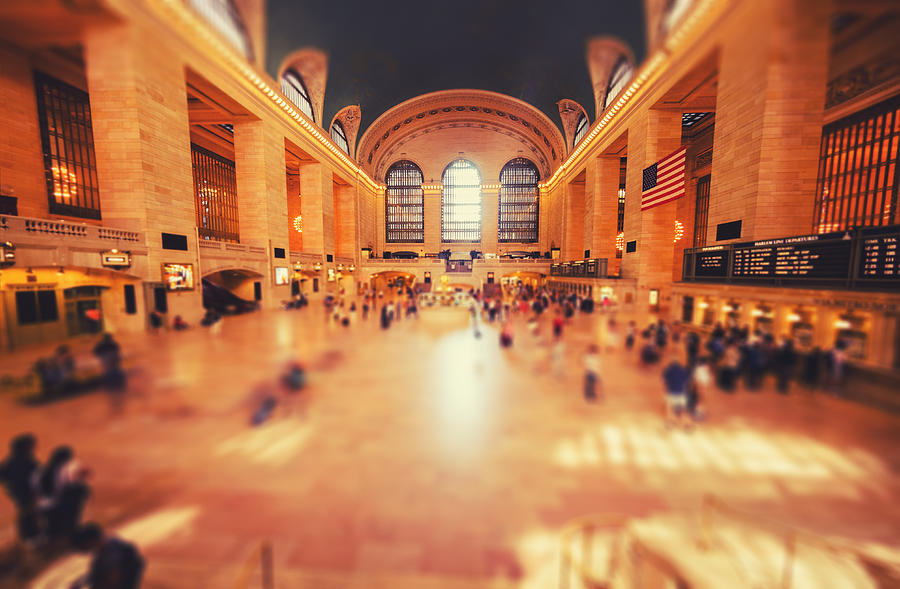
AWP (the Association of Writers and Writing Programs) is an annual conference and bookfair, the largest literary gathering in North America. It travels to a different city each year, drawing upward of 12,000 writers, teachers, students, editors, and publishers for four days of panels, readings, and a sprawling bookfair where hundreds of literary magazines, small presses, MFA programs, and writing organizations set up booths. Registration runs roughly $260–$380 for members, more for nonmembers, and that’s before travel and accommodation. The conference typically takes place in late winter or early spring.
Every year, as AWP approaches, writers ask the same question: is it worth it? The honest answer depends less on the panels or the bookfair than on what you understand the conference to actually be for—and what you’re willing to show up and receive.
What AWP Actually Is—and How to Survive It
The most important thing to know about AWP before you go is that it is not a career fair, a pitch festival, or a networking event in any conventional sense. It is a merchant exchange thumping in the center of whatever city you’ve gathered in, a bazaar of writers and publishers and companies developed through their own lives in writing. On Saturday, AWP drops the price of admission and throws open the doors to the sweaty masses. The lighting is like being in a casino and losing. It really does stink in there.
The mistake most first-timers make is arriving with too much expectation and too little lightness. The conference rewards curiosity and punishes agenda. The best time you’ll ever have at AWP is probably the first time you go, knowing no one, or next to no one. There is tremendous benefit to a sort of ignorance of the Way of Things. The ideal experience is to arrive on a Friday, when the event is busy and merch is verdant, to visit the booth of every publisher and program you’ve ever been interested in, heard about, or didn’t hear about. To chat up the booth vendors who, because you aren’t awkwardly trying to determine if you two should know one another, are happy to answer your questions, and to unabashedly request a tote bag, a hat, a mug, a sweatshirt, and end up with only one of those plus a sticker, because the rest require a subscription.
What you will actually find, if you approach it this way: the conference food won’t repulse you. You can take a breather at the University of Iowa booth, which is in fact two booths, and sip coffee and sit on their couch (is it the same couch every year, guys? Who is your cleaner?), watch a little TV, and ask questions about what famous people went to their program, and think it’s pretty cool when someone mentions Flannery O’Connor. One tote bag will house seven different tote bags, forthcoming issues of Hot Dog Magazine, and a matchbook from a tired, lipstick-ed woman holding a baby and insisting you take the matchbook.
To have fun at AWP, you need lightness. Less expectation, less dread, less school-days anxiety. Lightness, and a lot of water. Plus sunglasses and a hat.
The Encounter You Couldn’t Have Predicted
The deeper value of AWP—the reason to go even when you’re not on a panel, even when you don’t have a book out, even when you’re not sure what stage of the writing life you’re in—is the encounter you couldn’t have predicted, with the person you couldn’t have found, in the room you almost didn’t enter.
When writers go online, they are perhaps not their best selves. So when they meet in person, it’s an entirely different feeling. What strikes you, distinctly, is the generosity that people feel toward other people’s work. The literary world is small and interconnected in ways that only become visible when you’re standing in the middle of it, and AWP puts you in the middle of it for four days.
The encounters that matter most are rarely the ones you planned. You would never have met this woman if you were not standing on this threshing room floor right now—the one who is translating all of her great-great-great-grandmother’s works out of German, trying to figure out how to get people to read them. She was a very significant writer at the time, the first Arab woman to achieve that kind of literary legend status, and here is her descendant, at AWP, trying to figure out how to find her readers. That conversation happens because two people are in the same place at the same time. It cannot happen any other way.
The same is true of the professional encounters that feel like luck. An agent reads a story published in a literary magazine and reaches out on LinkedIn, first line something like, “Sorry I’m doing this on LinkedIn.” Right place, right time. But the writer was already doing the work, already publishing, already in the rooms where things like that can happen. You have to show up to the place to receive the luck. It doesn’t just fall from the sky. A friend gets a wonderful new job and keeps saying she got really lucky, she got really lucky. And yes, there is luck involved—but she showed up to the place to receive the luck. Both things are true.
The Writing Life, All in One Room
The most sustaining thing AWP offers is harder to name than a connection or a career opportunity. It is the reminder that you are not alone in this, that the writing life in all its difficulty and duration is shared, and that everyone in that convention hall is somewhere on the same long road.
The whole spectrum is represented. Someone has a book coming out, sold on a proposal and about fifteen pages—oh, interesting, that’s so rare. Someone else is in the purely generative stage, supposed to have 80,000 words, with 30,000 that she feels good about, jumping from section to section, doing what feels good, grabbing everything that passes by, sticking it in, seeing how it feels. You’re really in that joyful place. Someone is sending out two poetry manuscripts to a bunch of places and hoping somebody picks them up soon. Someone’s second book is taking longer than expected. It just needs time to… ripen. You get a little embarrassed. Like, why did… the second book is just harder.
This is the corrective AWP offers to the isolation of the writing life: proof that every stage of the journey is normal, that the gap between books and the manuscript living in the graveyard folder and the novel that won’t behave are not personal failures but simply the shape of the work, that today is the same literary world that it’s always been. Always people long for Le Belle Époque, Paris of the 1920s, the poetic explosion of the 1960s, or even nowadays, insanely, the grungy 1990s and its DIY optimism. Nostalgia is an art killer. You’re alive exactly when you need to be to make the art you need to make.
You go to readings. You meet other artists. You stand in sweaty fluorescent rooms and run through a sales pitch (god help you if you’re tabling). It’s so embarrassing! But it’s the only way to participate as an artist in the greater community of your art form—and the only way to become the best artist you can be is by participating in the community.
The writing life is long, and no single conference will make or break it. But the writers who show up—to AWP, to readings, to the rooms where their people gather—tend to be the ones who feel least alone in the work. If you’re looking for support at whatever stage you’re at, Hewes House will almost certainly have a booth at the conference. Stop by and take a matchbook.