Find Writing Inspiration in Galleries and Unlikely Books
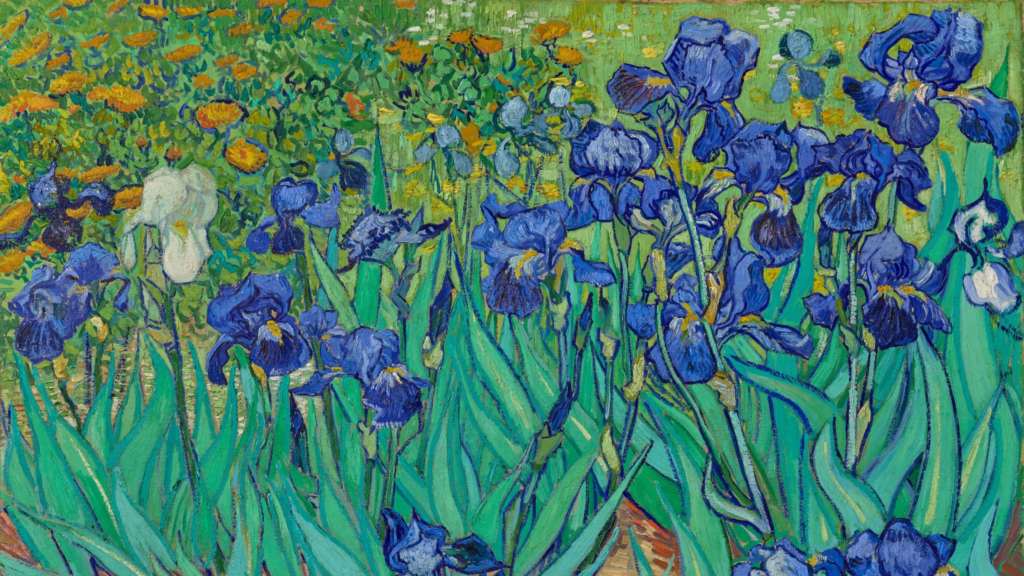
If you’ve been staring at that blinking cursor waiting for inspiration, the answer might not be another craft manual. It might be outside your home, even outside your computer or (gasp!) the internet, and instead hanging on a gallery wall.
Picture the rather ironically named Spring/Break, an annual autumn exhibit of contemporary art in New York. It is essentially an artist convention; think AWP for art. Artists apply, then create or curate a show of their own work or of other people’s. For many exhibitors, it’s the biggest day of the entire year in terms of sales. They prepare for months and months, show up, and hope to sell enough to cover more than just another month’s rent (sound familiar, writers?).
An art fair is hierarchy-forward. Artists who have been coming for many years get preferential treatment, much like writing conferences, where fifteen years of attending AWP earns you one of the prime booths right at the entrance to the bookfair.
Many artists and exhibitors leave out free postcards, essentially business cards with reproductions of the art, reminding the recipient to contact an artist whose work they enjoyed or, at the very least, follow them on Instagram. Because after all, artists, like writers, have to sell their persona for clicks.
Why Do Other Art Forms Spark Writing Inspiration?
Cross-medium inspiration means feeding your writing with art forms other than writing. The best recharge for your own art often comes from art of other mediums: television shows, movies, music, and the paintings in a gallery. Reading, of course, offers the most one-to-one connection between what you’re doing and what has been done in the world, so there’s plenty of inspiration to be had there.
When you look at paintings, though, especially paintings by artists who are out there taking wild risks, you may find yourself creating far more generative analogies to your own work. There’s a reason for this: your brain carves out new pathways every time you have even a small new experience, and that phenomenon keeps happening well into adulthood. If you’re constantly having new experiences, your brain is constantly having to work and sharpen itself. That’s exactly what happens when you expose yourself to new art.
It helps to see how artists in other mediums work with themes and big ideas. The same openness that pulls you into a gallery can work in the book you’re writing, too.
Read What Wasn’t Written for You
Writers tend to become obsessed with refining a single craft element, like dialogue, description, or plot, and then read only with this element in mind. Instead, consider getting into the habit of opening up your artistic palette by reading outside of your genre. Read things you don’t think you would like, things that aren’t marketed toward you, or things that lack the sensibilities and prose tendencies you usually love. Do it intentionally, in order to grow.
Writers naturally gravitate toward books that resemble themselves and their own writing. Like attracts like. Still, that doesn’t mean you shouldn’t push yourself.
The great thing is that there’s no requirement to enjoy what you pick up. If a book doesn’t hold you, put it down. No one has to finish the book. (We hereby give you that permission, once and for all.)
Romance offers a good example. You might start reading Sophie Kinsella or Emily Henry as a joke (ha!), and then find yourself genuinely pulled in by the plot (oh!).
That type of reading experience deepens even further when you stick with one author and follow their publishing career. Read the early books, keep reading, and you can see the way a writer perfects her or his thing over time, whether Dostoevsky or Henry (Emily or Miller, take your pick).
Here’s a concrete, albeit controversial example: many readers describe the joy of the Harry Potter series read chronologically. Book one is not especially well written. Over the course of the series, you watch J.K. Rowling grow as a writer and improve across different craft elements, though she may never fully master them and might even go too far at times. Read the first book and then the fifth, where she arguably nails it, and the difference is night and day. Even the superficial difference is striking, with the first running roughly 300 pages and the fifth closer to 900, yet they cover a similar scope, one school year each. Same scope, but as an author, she learned how to dig in deeper, with more psychological nuance and stronger plot.
Try This: Feed Your Writing From New Sources
- What impact might visual art have on your writing? Try visiting an art gallery or fair, but look with your draft in mind, searching for metaphors or for an artist whose method you might translate to your own page.
- Get curious about how other artists talk about their own work. Take the free postcards, but don’t stop there: follow artists on social media, with an eye toward how their own process or approach speaks to yours.
- Read wider, deliberately. Choose one book that isn’t marketed to you, that you would never pick up on your own. Give it a try, and keep an open mind. But also give yourself permission to put it down if it’s unbearable.
- Set out to read one author in order, from start to finish. Notice where they seem to lose steam, but also where they learn to dig in. Then think about where you’re at in your own journey. Are you digging in? Or just getting your footing?
Your next breakthrough might come from an art gallery wall or a romance novel you picked up as a joke. If you want help turning what inspires you into the manuscript on your desk, book a free consultation with a Hewes House writing coach. Our coaches and editors are here to help you get your book out of your head and into the world.